Arian Abri thought the LinkedIn message was a scam. It changed everything.
22, Uber, and a problem worth solving.
 Rebecca Pearson5 min read
On this page
A recruiter sent Arian Abri a message on LinkedIn during his second year of university. He didn't recognize the company name. The message didn't say "internship" or "student opportunity", it just said "job position," so he assumed it was spam.
What it actually was? A full-time offer at Spendesk, one of the largest expense-management companies in Europe and a French fintech unicorn. Arian didn't realize it was a full-time role until the final interview, when he saw the salary. "I was like, okay, this isn't a salary for an intern," he said. "But I just didn't say anything. I signed the contract and started working."
He was twenty years old.
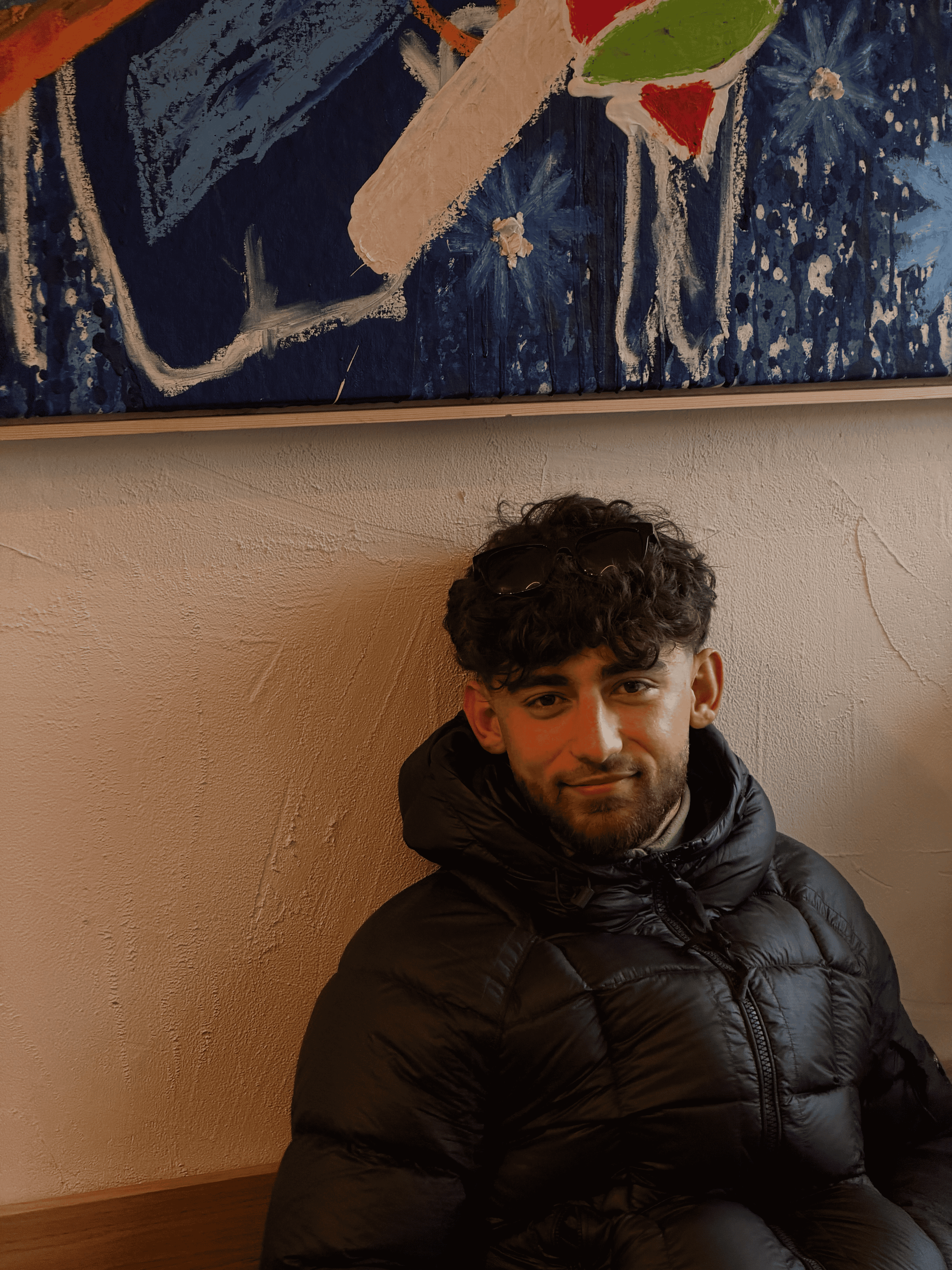
Before any of that, there was door-to-door sales in Leipzig.
Arian grew up in Berlin. When it came time for university, he enrolled in Business and Management at Lancaster University at their satellite campus in Leipzig, partly because of Covid, partly because leaving Berlin felt right at the time. He ended up staying in Leipzig for all three years.
He wanted to keep pushing himself, so he started working on the side, around his studies, almost immediately. His first job was door-to-door sales as a working student. "It was really a rip-off," he said. "But I learned a lot. I got confident at the door. And I really found out that sales was kind of my thing."
He stumbled onto LinkedIn around the same time and started building a profile — slowly, without much strategy. "My profile was kind of dead," he said. He picked up another door-to-door job. Then he landed an internship at a large solar energy company in Berlin, which, he later learned, was a keyword that recruiters in that market used to find candidates.
Then the Spendesk message arrived.

The entire process — from the DM he thought was a scam, through multiple interview rounds where nobody told him it was a full-time position — has a comic quality that Arian talks about with disbelief. "It was like a quagmire," he said. "I didn't know it was a full-time job and they didn't know that I didn't know it was a full-time job."
He worked at Spendesk for seven months. Then Uber hired him.
At Uber, everything accelerated.
Arian joined Uber's enterprise team two days after turning twenty-two. He was surrounded by people a decade older, working accounts that demanded technical fluency and commercial maturity well beyond what most people have at that age.
"I made good money," he said. "But more importantly, I learned a lot."
What he also gained, without intending to, was visibility. Recruiters messaged him daily. His LinkedIn profile had crossed some invisible threshold in the algorithm, and the offers kept coming. He would send Snapchat videos to friends of the startup breakfasts and his Uber Eats credits. He didn't think much of it at the time, but his friends did.
"A lot of my friends asked me: 'Arian, how did you do it? How did you get in? I also want a job in a startup.' So I just thought, why not start placing young people if I know both sides of the world?"
Most of his friends were still in university. They were applying to fifty jobs and hearing nothing. They saw the startup ecosystem from the outside but had no way in. Arian had been on both sides. He knew what it felt like to get nothing, and he knew what it looked like once you were inside.

He started building the bridge himself.
GENZ4GTM — Gen Z for Go-to-Market — is what Arian is building now. It is, in his words, "Germany's youngest tech talent pool for commercial, sales, and generalist roles." SDRs, founders' associates, marketing managers. They're the positions that exist in every growing startup but that most twenty-one-year-olds have no idea about and no path toward.
When he started, the work was manual. Every day, he would spend roughly four hours scraping job boards, cross-referencing listings, finding the right contacts, personalizing outreach emails, and sending them one by one. Join, Glassdoor, Indeed, LinkedIn — each platform required a different workflow. It was effective, but it didn't scale.
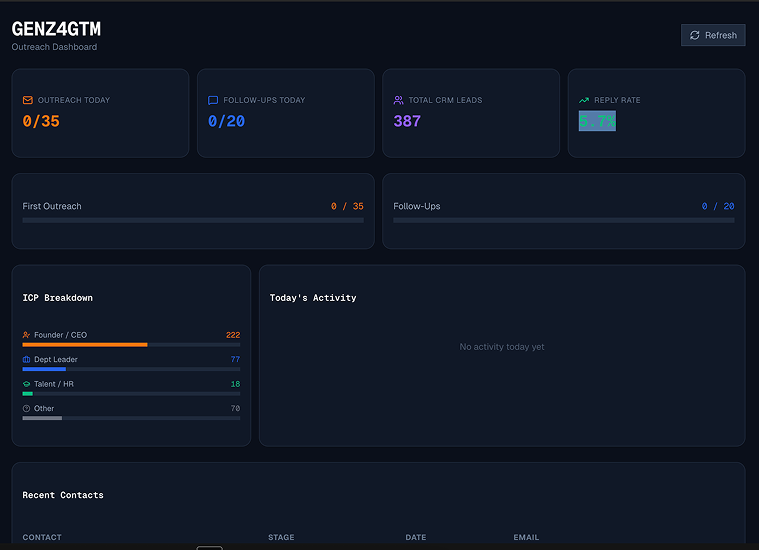
"I don't have any n8n or Make.com experience," Arian said. "Those are the more technical automation tools. CodeWords really surprised me in how simple it was — and that was really what I loved about it."
Arian joined CodeWords' builder-in-residence program with credits and a clear goal: automate the outreach. The work that had been taking four hours, the scraping, the email finding, the personalized messaging,m now runs on its own.
The business is still early. The story is not.
GENZ4GTM is coming out of a three-month pilot. Arian is still in university, still balancing coursework with outreach and placements, still figuring out which parts of the business can be automated and which need a human touch.
The origin isn't a market analysis though. Instead, it's a specific, personal thing: his friends asked him for help, and he knew enough to give it. He'd been the youngest person in the room at every job he'd held, and he'd watched the algorithm reward him and ignore the people he grew up with.
He decided that knowing both sides of the world could unlock it for others too.
"I know what it's like to not get any job offers," he said. "50 applications and nothing. I also know what it's like working in a startup and being the youngest person there and navigating that world."